By Frederic
I started to buy a book “sailing for Dummies” and realised that even if there is plenty of useful information, I was progressing very slowly. I needed to put these information into practice.
I decided to take my first sailing lesson on a 4.5 metre dinghy on the Noosa river. My instructor was young, very young compared to me, but really friendly and knowledgable and we got along really well. The issue when you learn on a small dinghy, if you make even a small mistake, you will capsize the boat which means the boat will turn upside down, and I wasn’t too keen on going for a swim.
Another big problem is that after I worked for more than 20 years as a chef, my body has become very stiff, and in this type of boat you better be agile and flexible. If it is your case, good for you!… I did not enjoy the fact of having little room for mistake and the fact that I was hurting myself every time I moved around. I stopped after my second dinghy lesson.
In the mean time I was reading my book and a lot of the content started to make sense. I also looked at some videos on the internet and learned a lot of things there. I have to admit, the sailing language is a problem for me, I never spent enough studies in my life, and learning that language and also not in my mother tongue is challenging.
Your learning curve will be quite difficult if you do not learn the nautical terms as quickly as possible. All sailors and instructors will only use nautical terms. This is why I recommend to read a lot as well as practice.
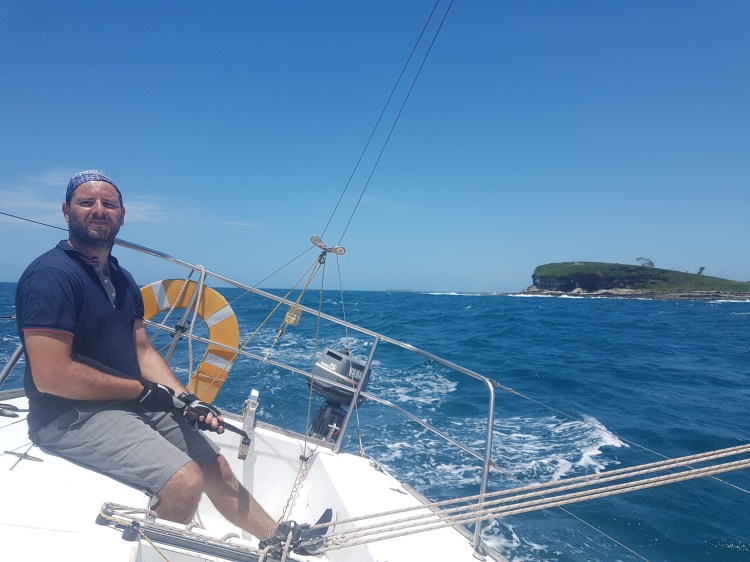
I then moved to a slightly bigger boat, a J24 (24 footer coastal day tripper only keel boat). I did 3 different courses from Mooloolaba with Sunshine Coast Sailing. I learned a lot more and gained confidence in my capabilities. The courses I did were: Keelboat Crew, Helm and Seamanship.
I learned to steer a boat (directing your boat),I learned to do the most important nautical knots, there are a lot of knots to know but I realised only 4 or 5 are really important, and for now I never needed to use the other ones.
- Figure of 8: A very simple knot used at the end of a rope to stop it from sliding of a cleat (fitting to secure a rope under load so that the rope doesn’t slip).
- The Bowline: It forms a loop at the end of the rope, it will resist any form of pressure, really useful to attach anything with a lot of movement like the main sail.
- The Reef Knot: It permits to attach a rope to another rope very strongly.
- The Cleat knot: It is the knot you use to attach the boat safely at the marina.
- The clove Hitch: It is the knot you will use to attach the fenders(big buoy on the side of the boat to protect it from being damaged at the marina)
Funny fact: If you sail away with your fenders still on the side of the boat, you will definitely look like an amateur to other sailors, not recommended 😉
I also learned to understand wind directions which for me was the most important thing to learn on a boat. If you can’t understand which way the wind is blowing, your boat will never take the direction you want to or even worst not go anywhere at all. I then learned to position my sails, however in that matter I do only know the basics. As for the old school sailors, it is only after many years of practice you will instinctively know how to position your sails perfectly.
I have watched a lot of videos about the sails and the winds, even some with scientists from NASA and yes it will take a long time before I know it all.
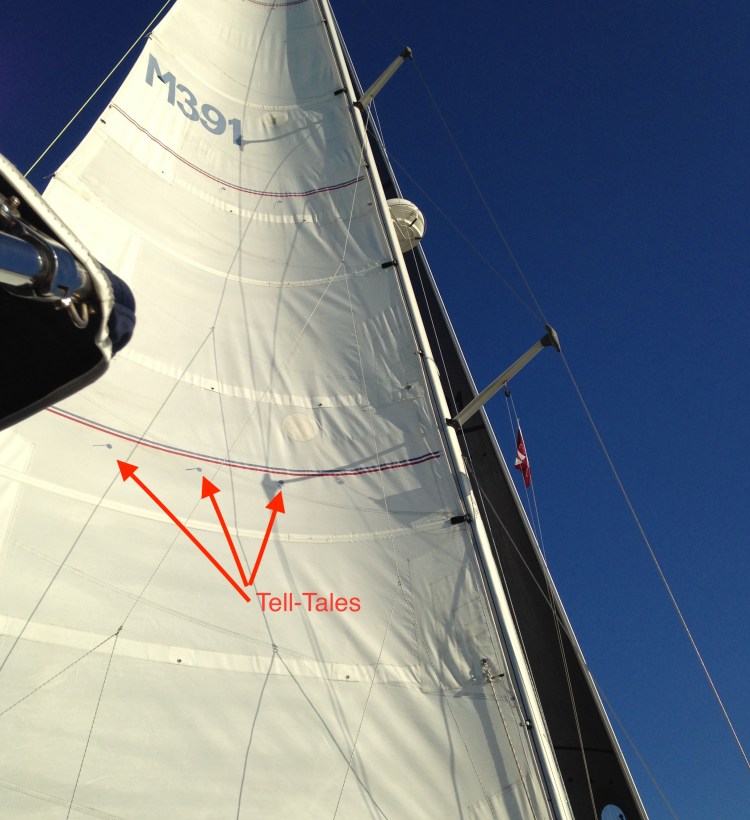
Funny fact: The most important instrument on the sail boat, even on a million dollars boat, are small pieces of string on each side of the sails indicating if your sails are positioned perfectly into the wind, they are called the Tell-Tale… Hmmm!…
I learned as well, a few different parts of the boat, which rope is attached to what and their function and as you can imagine most ropes have a different name so you don’t get lost to which one you have to use; some technical terms and some rules of the road; how to put up an anchor, the very basics of the man over board situation and the basics on how to read a chart.
One of the things I was very interested in and in my opinion wasn’t pushed enough for me, was the reading of the charts and the understanding of the tides, but I know if I push my courses to a higher level I will learn that later on.
These lessons were very useful, and again my instructor was very friendly and we became very close but now I am ready for another bigger boat and look forward to see and use some of the electronic equipments (GPS, radar, autopilot, chart reading, etc…).


From now on, I am going to the Yacht Club in Mooloolaba on a regular basis on Wednesday or Sunday. They are doing friendly races between local sail boats, I can join as a crew until I become a member and so far have learned quite a bit every time. I also like the fact that I am jumping on different types of boat, it gives me an idea on the type of boat I would like to buy or not buy in the hopefully not too far future.
I do have to request special days off from work, it’s not always easy, so learning is slow but with persistence, one day I will become myself an old school sailor who can teach a young guy like me.
Funny fact: I am 37 years old today, and for the sailing world I am a kid, and it reminds me of the times when I was 15 as an apprentice chef.


 Journey to Freedom Sailing